


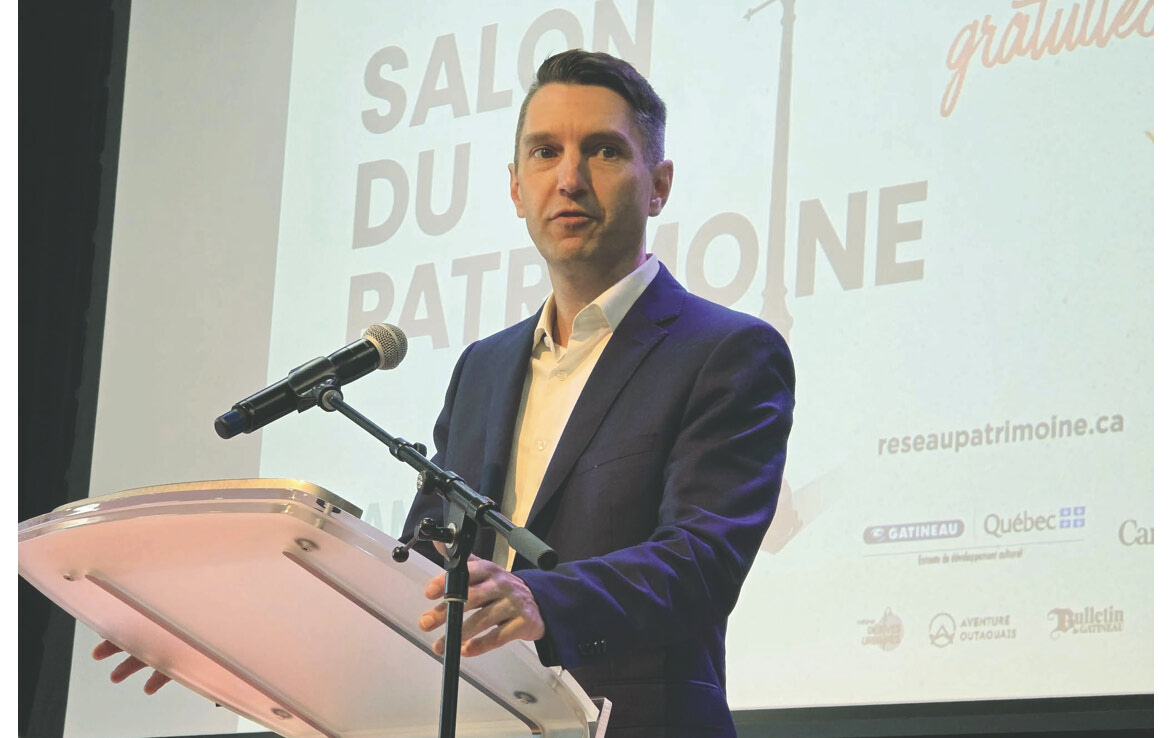
André Fortin, MNA for Pontiac and leader of the Quebec Liberal Party, says the coming 50 per cent US tariffs should push Quebec to tear down its own internal trade barriers, and pledges a Liberal government would sign the national direct-to-consumer alcohol deal Quebec refused and swiftly rewrite the province's forestry and mining rules to help local producers weather the trade war. Photo: Tashi Farmilo
Election campaign ramps up
Liberals announce they would sign national alcohol deal Quebec shunned and rewrite forestry rules
Tashi Farmilo
Quebec is leaving local producers exposed to American tariffs by refusing to dismantle the internal trade barriers within its own control, Pontiac MNA and Quebec Liberal leader André Fortin said in an interview, pledging that a Liberal government would sign the cross-country alcohol-sales deal the current government walked away from and move quickly to overhaul the province's forestry and mining rules.
The 50 per cent US tariffs taking effect August 19 under Section 338 reach a long list of Canadian goods, and Fortin said their impact in the region is hard to trace to any single producer. The list of potentially affected businesses is very long, he said, and each must run its own calculations, because the hit is not always to the initial product. "Sometimes the residues of a certain production are used for something else," he said, describing how a tariff can travel through a supply chain in ways that are not obvious at first. The deeper danger, in his view, is the climate the tariffs create. "That uncertainty causes people to reduce spending. It causes investors to hold back some investments, and that's where there's a big risk coming from what the Americans are imposing on us."
So far, he said, few Pontiac businesses had come forward to say they would be directly hurt, unlike specific factories in other regions that have already raised their hands, but he described the overall context as worrisome to a lot of people. Pressed on the Outaouais specifically, he pointed to forestry as the sector under the most strain. "The forestry industry in general is reeling quite a bit," he said. The industry depends on cooperation, he explained, with different producers drawing different wood species from the same public lands, and "if some of those players drop out, then everybody's cost of production increases." He called it a gloomy situation for the forestry industry and for all the products made from wood.
Even so, Fortin was firm that the tariffs are no reason to soften Canada's response. To the Liberal Party of Quebec, he said, the overall context means "there cannot be even a slight reprieve in terms of the measures we are imposing, whether it's on alcohol or anything else." The country cannot waver on the countermeasures its governments have put forward, he said, and provinces need to start working together far better than they are.
That call for cooperation led him to his sharpest criticism of the current government. Nine provinces signed a deal at the Council of the Federation meeting in Charlottetown in July to let breweries, wineries and distilleries sell directly to consumers across provincial lines. Quebec was the only province not to sign, though it is reported to be working toward joining. Fortin called the agreement a prime example of Canada's provinces building a larger market for local producers and said Quebec's absence comes at a direct cost to its own. Asked whether a Liberal government would sign it, he answered without hesitation that it would, calling the province's refusal unacceptable and shameful. Nine provinces did their homework and changed the regulations they needed to, he said, while Quebec claimed it still had modifications to make and was not ready. He put the failure down to "government ideology or government laziness that impacts negatively our local producers."
He said that failure is one he hears about directly from constituents. "I've spoken to brewers here in the region. I've spoken to cider producers here in the region, to wineries, and they all say we have a market at our door here in Ontario. We are ready to go." Those producers could sell across the river, he said, "unfortunately, the Quebec government and the CAQ does not allow us to do so, while every other province is allowing their producers to benefit."
On why a long-standing trade relationship with the United States had turned, Fortin placed the blame entirely on Washington. The American leadership had decided to strike an economic war with Canada, he said, one entirely of its own making, and the country had a duty to respond. But he drew a firm line between that federal duty and the provincial one. "As provincial governments, Quebec and the other provinces have a responsibility to prepare our economic sectors to be more profitable inside our own borders."
Forestry was his central example of a barrier Quebec has imposed on itself. The province's forestry regulations cost producers and mills far more than they should, he said: "It costs more in Quebec to get wood from public lands than it does in other provinces," and the rules fail to offer the predictability the industry needs. "There are rules internally that we need to change, and we need to change fast," he said, arguing that easing internal pressure is precisely what a provincial government should focus on when the US market becomes harder to reach. If access to the American market tightens, he said, "provincial governments have a responsibility to look at the framework in which businesses operate and to simplify life for everybody, because our economy depends on it."
Asked for his own recommendations, Fortin named two beyond signing the alcohol deal. Quebec needs a new forestry regime as soon as possible, he said, and it needs mining regulations that let companies thrive in regions where the activity is socially accepted, to drive regional economies and create jobs. If the United States is intent on an economic war, he said, then those kinds of measures, which help the economy grow internally and protect some businesses while the tariffs are in place, are exactly what a government must deliver.