


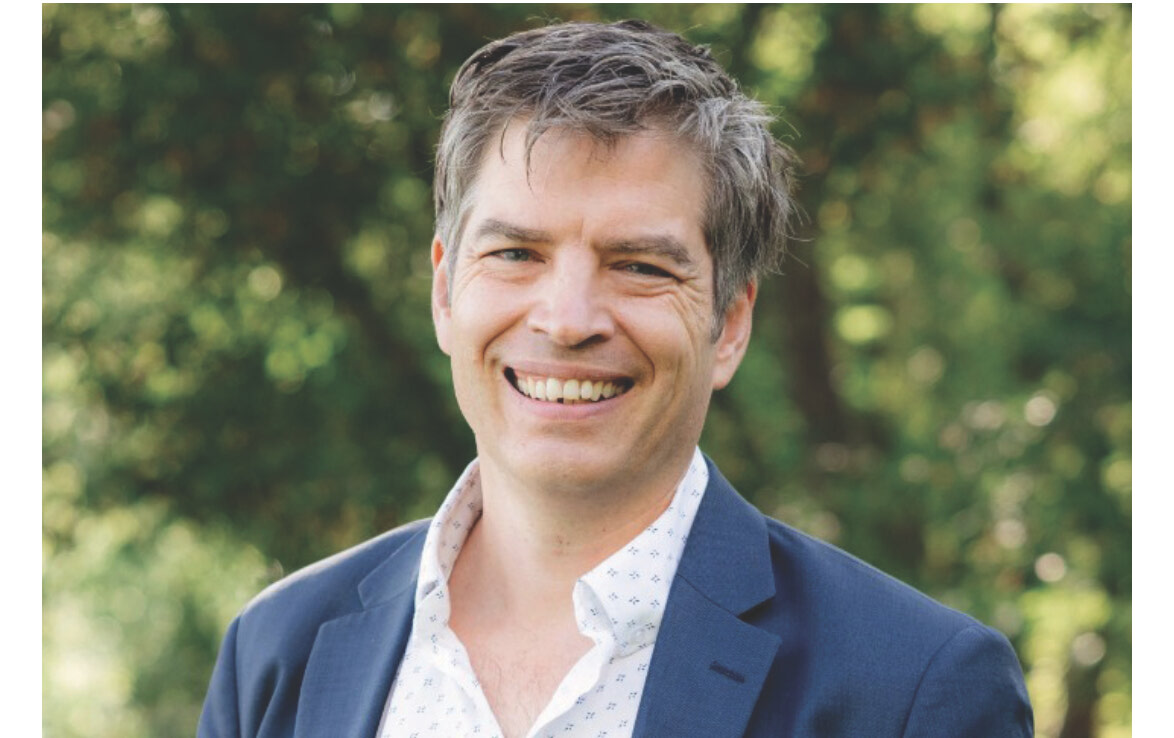
CREDDO director general Benoit Delage explains how Quebec's new 25-year energy plan could translate into real local benefits for the Outaouais, from solar panels and battery backup on municipal buildings to forest biomass and industrial waste-heat networks, arguing the region can reach carbon neutrality and strengthen its economy if the transition is planned and coordinated. Photo: Agatha Rowland
Cheaper bills, solar on town halls and fewer outages: what the energy shift could mean for the Outaouais
Tashi Farmilo
Quebec's new 25-year energy plan sets ambitious province-wide targets, but the Conseil régional de l'environnement et du développement durable de l'Outaouais (CREDDO) says the real work is turning that vision into projects people here will actually feel, from solar panels on municipal buildings to backup power for communities that lose electricity for days at a time.
Through its Outaouais Energy Transition Plan (PTÉO), the CREDDO is lining up the projects, partners and funding to make that happen, with its main findings due in the coming months.
The starting point, says CREDDO director general Benoit Delage, is not a new power source at all. "The cheapest and cleanest energy is the energy we don't consume," he says. Cutting consumption lowers bills, reduces emissions and eases pressure on the electricity grid, which is why efficiency comes ahead of everything else in the plan.
From there, Delage argues, the region is better positioned than most people realize. "Contrary to some perceptions, the Outaouais enjoys excellent sunlight by Quebec standards," he says, pointing to rooftops on commercial, industrial and institutional buildings as prime candidates for solar. He is just as enthusiastic about a resource most residents never think about: waste heat.
The CREDDO sees "major potential in thermal networks fed by industrial waste heat, a largely underused resource," alongside forest biomass, renewable natural gas and hydrogen for sectors that are hard to electrify, such as heavy trucking. The lesson from the modelling, Delage says, is that no single fix will do it: reaching carbon neutrality "comes through a combination of these different sources rather than one solution."
Some of this is already moving from theory to blueprint. The CREDDO is helping several municipalities study solar panels paired with batteries on essential buildings, so a town hall or key facility can keep running during a blackout. It is working with Hydro-Québec, university partners and private companies to prepare projects that can be launched quickly, and the region now has a single coordinating table, the Energy stream of the Partenariat Climat Outaouais, where those players line up structuring projects together.
The payoff, Delage says, is concrete on every level. For municipalities, it means lower energy costs, more resilient critical infrastructure and new revenue from energy assets they own. For businesses, cheaper power, steadier supply and easier investment. For residents, "quality jobs, greater energy security, lower greenhouse gas emissions and, over time, a more resilient regional economy." The modelling, he adds, shows the Outaouais can reach carbon neutrality while strengthening its economy, "provided the transition is planned and coordinated."
Rural areas in particular stand to gain. The Pontiac, with its natural resources and large public buildings, is well suited to solar projects and to putting forest biomass to use, Delage says, and the long power outages some sectors have endured strengthen the case for local generation combined with battery storage. The deeper shift he wants residents to grasp is one of role reversal: rural municipalities "can become economic players in the energy transition rather than simply consumers of energy."
The technical work behind the PTÉO is now largely complete. The CREDDO is finishing its consultations with regional and government partners so the recommendations can move quickly into real projects, with the main results to be made public in the coming months. As Delage puts it, the region has more than 50 initiatives underway, and the energy plan is the thread meant to tie the most promising of them together.