


Home Contact Sitemap login Checkout


Bulletin d'Aylmer
  • Home
  • Local FR
    • Local FR
    • Vivre en santé
    • Provincial
    • Conseil
      • Conseil
      • Élection partielle 2024
    • Les chiens d'Aylmer
  • Opinions
    • Opinions
    • Lettres à l'éditrice
    • Éditoriaux
    • Chroniques
  • Soumettre une lettre à l’éditrice
  • Événements
    • Événements
    • Soumettre des photos
    • Photo Submissions
    • Le Meilleur d'Aylmer
      • Le Meilleur d'Aylmer
      • Galerie de photos 2024
      • Galerie de photos 2022
      • Galerie de vidéos 2022
      • Galerie de photos 2018
      • Galerie de photos 2017
      • Galerie de photos 2016
      • Galerie de photos 2015
      • Galerie de photos 2014
      • Galerie de photos 2013
      • Galerie de photos 2012
  • Annonces classées
  • Répertoire
  • Coordonnées
    • Coordonnées
    • Équipe administrative
    • Abonnements
      • Abonnements
      • Modifiez votre abonnement
    • Équipe éditoriale
    • Équipe de publicité
    • Équipe de production
    • Équipe de distribution
    • À propos
  • Local EN
    • Local EN
    • Healthy Living
    • Provincial
      • Provincial
      • News from across Quebec
    • Council
      • Council
      • 2024 mayoral by-election
    • Dogs of Aylmer
  • Opinion
    • Opinion
    • Editorials
    • Columns
    • Letters to the Editor
  • Submit a Letter to the Editor
  • Events
    • Events
    • Best of Aylmer
      • Best of Aylmer
      • 2024 Photo Gallery
      • 2022 Photo Gallery
      • 2018 Photo Gallery
      • 2017 Photo Gallery
      • 2016 Photo Gallery
      • 2015 Photo Gallery
      • 2014 Photo Gallery
      • 2013 Photo Gallery
      • 2012 Photo Gallery
  • Classified Ads
  • Directory
  • Contact
    • Contact
    • Subscriptions
      • Subscriptions
      • Adjust your Subscription
    • Editorial Team
    • Advertising Team
    • Production Team
    • Administration Team
    • Distribution Team
    • About
    • Outaouais Newspaper App
Print This Page

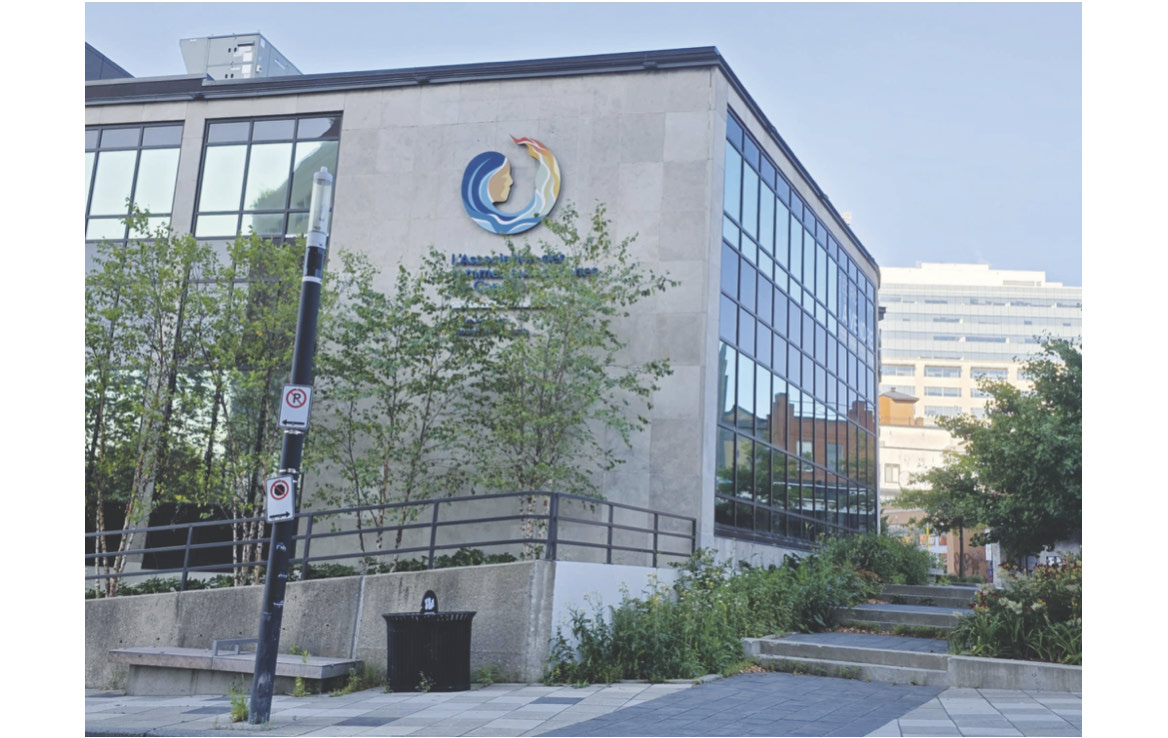
The Native Women’s Association of Canada, once rooted in grassroots advocacy for Indigenous women, is now selling off multimillion-dollar properties and facing a federal audit after years of financial mismanagement and a controversial pivot toward real-estate ventures, raising questions about how far it strayed from its founding mission. Photo: Tashi Farmilo

A movement built around kitchen tables, now mired in mortgages


Tashi Farmilo


Fifty years ago, the Native Women’s Association of Canada (NWAC) was forged from necessity and resistance. Indigenous women, excluded from policy-making and political leadership, came together to challenge legal discrimination, systemic poverty and colonial violence. They travelled long distances to meet, borrowing cars, baking bannock, and bringing children along. What began around kitchen tables grew into a national voice for Indigenous women, grounded in the principle that they must speak for themselves.


In 2025, that voice is quieter, weighed down by debt, layoffs and internal review. NWAC is now selling its $8-million Gatineau headquarters, divesting cultural properties, and cooperating with a federal audit covering fiscal years 2018 to 2024. In a statement released July 15, NWAC acknowledged “serious and significant financial irregularities” uncovered by current management. An internal review of past contracts is underway, and all unprofitable business ventures have been shut down. The organization says it is returning to its “foundational values.”


The Gatineau building, purchased in 2018, was mortgaged three times: first for $1.8 million, then $5.9 million in 2020, and finally $7.5 million in 2022, according to records reviewed by CBC News and APTN. Renovated to include a café, gallery and meeting space, it was part of an “own-source revenue” strategy designed to reduce reliance on federal funding. But by July 2025, CBC reported the property was being offloaded amid a soft commercial real estate market.


NWAC also invested in properties in Chelsea and Gagetown, New Brunswick, where it planned to operate Resiliency Lodges—healing centres for Indigenous women and gender-diverse people. APTN reported both sites are now being sold or handed over to Indigenous partners. The Chelsea property is being repaired ahead of sale. In Gagetown, NWAC issued a tender seeking a new Indigenous organization to manage or potentially take ownership of the property.


NWAC’s financial statements show rapid expansion. Its 2023 audit, published on its website, shows assets rising from $15.9 million in 2022 to nearly $42 million in 2023, fuelled by federal grants and deferred revenue. That year, grant income alone topped $21.7 million. However, debt also grew—reaching $6.3 million, much of it linked to mortgages. The auditor issued a qualified opinion, flagging issues including the misclassification of capital assets and incomplete donation records.


This financial and infrastructural growth did not bring stability. APTN reported NWAC laid off 75 employees in 2024 after federal funding dropped from $48 million to $10 million. Around the same time, former CEO Lynne Groulx departed, and several provincial affiliates were expelled amid internal conflict.


Public criticism followed. CBC and APTN documented frustration from grassroots advocates who felt NWAC had become disconnected from its base. APTN also reported that in May 2025, Wolastoqey Elder Alma Brooks wrote to federal and provincial officials raising concerns about NWAC’s handling of its cultural lodges. She said the sudden shutdown of the Gagetown facility—without consultation—breached community trust and failed to honour its publicly funded purpose.


These recent chapters mark a sharp turn from NWAC’s original story. In its 50th anniversary magazine, NWAC recounts its beginnings: women raising funds through bake sales, organising letter-writing campaigns, and fighting to have their voices heard by a federal government that rarely listened. They worked without capital, but with resolve.


Today, as NWAC sheds its buildings and re-evaluates its finances, it says it is trying to return to that core. Whether it can restore the trust of the women and communities it was built to represent remains uncertain. The infrastructure may be going—but the question is whether the foundation still stands.


continue reading

Local EN
Council
Provincial
Opinion


Bulletin d’Aylmer

Contact & Subscription

Tél. 819-684-4755 ou / or 1-800-486-7678
Fax. 819-684-6428

Monday to Friday
from 9:00 am to 5:00 pm
Unit C10, 181 Principale, Secteur Aylmer, Gatineau,
Quebec, 
J9H 6A6


Advertise with us

819-684-4755

pub@bulletinaylmer.com


French

Locale
Conseil
Provinciale
Événements
Vivre en santé
Opinions
Papier Entier
Abonnements


English

Local
Council
Provincial
Events
Healthy Living
Opinion
Entire Paper
Subscriptions


Site Manners  |  Built on ShoutCMS


This project has been made possible by the Community Media Strategic Support Fund offered jointly by the Official Language Minority Community Media Consortium and the Government of Canada

Nous sommes membre de l'Association des journaux communautaires du Québec.
Financé, en partie, par le gouvernement du Québec
et le gouvernement du Canada .

En collaboration avec le ministère du Patrimoine canadien .

We are a member of the Quebec Community Newspaper Association. 

Funded, in part, by the Government of Quebec ,  the Government of Canada .
In cooperation with the Canadian Heritage department .

Aylmer Bulletin  |  Bulletin de Gatineau 
|  The West Quebec Post  |  Journal du Pontiac